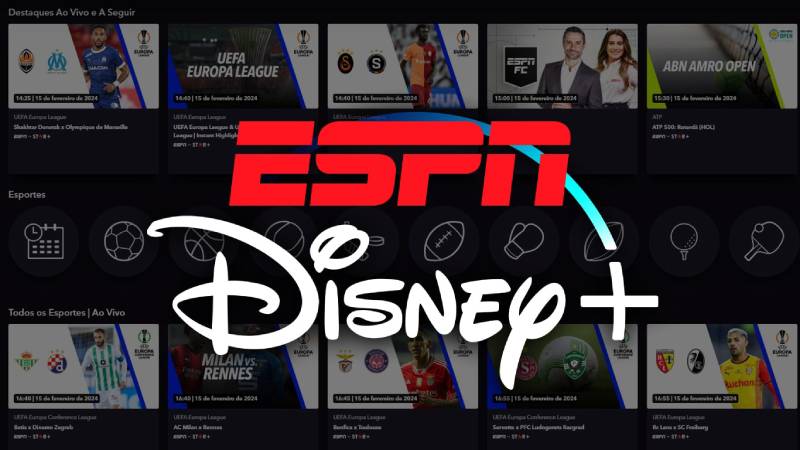
The eagerly anticipated ESPN streaming service from Disney (DIS) is now available.
The fact that subscribers can now watch all of ESPN’s content outside of a cable bundle for the first time highlights how much the sports media environment has changed.
The new ESPN app, which will stream around 47,000 live events annually, will cost $29.99 per month. The introduction marks the most significant change in Disney’s strategy to move from legacy networks to digital distribution. For the cable industry as a whole, it also signifies the end of an era.
ESPN anchored a vast menu of sports programming that kept households subscribed and brought in billions of dollars in carriage fees for its parent company, making it the gem in the crown of the cable bundle for decades. Until it didn’t, anyway.
ESPN reached a peak of over 100 million cable subscribers in the US in 2011. Since then, that figure has decreased to about 60 million. By the end of 2024, Netflix had about 302 million members worldwide.
Disney’s most recent quarter saw a 15% year-over-year decline in linear network revenue and a 6% increase in direct-to-consumer revenue, which includes Disney+ and Hulu. In an effort to lower churn, Disney is also planning to combine Disney+ and Hulu into a single platform the next year. Along the way, the business has made changes, such as earlier this summer when it laid off employees in all of its international businesses.
‘A sports fan’s dream’
The introduction of the new ESPN app, which Disney CEO Bob Iger has referred to as “a sports fan’s dream,” comes after a string of significant content agreements meant to bolster ESPN’s rights footprint.
In exchange for a 10% equity share, Disney and the NFL reached a preliminary agreement earlier this month to purchase NFL Network, NFL RedZone, and NFL Fantasy. These properties will be included into the new platform.
Ben Swinburne, an analyst at Morgan Stanley, said earlier this month that ESPN’s long-term future is progressively more safe now that the NFL is an investor. “The NFL will be even more motivated to help ESPN survive and possibly thrive in the new streaming-first world ahead if they invest in ESPN.”
Beginning in 2026, ESPN will be the sole US streaming provider of WWE’s premium live events, including major events like “WrestleMania” and “SummerSlam.” The reported annual value of the five-year agreement was $325 million.
In addition, the business extended its NBA television rights in the spring, reportedly increasing its yearly payments from $1.5 billion to $2.6 billion, and it is still in negotiations with MLB.
In 2024, ESPN also signed a 10-year agreement with the SEC, which would make the network the only broadcaster of SEC men’s basketball and football, including the SEC title and high-profile games.
However, this change in rights agreements is only the most recent in a series of moves that have moved sports away from broadcast networks and cable and toward the unbundled world of streaming services.
Thursday Night Football has been exclusively owned by Amazon (AMZN) since 2022. For the 2024 NFL season, Google’s YouTube TV (GOOGL) replaced NFL Sunday Ticket. Major League Soccer and MLB games are streamed by Apple (AAPL) on Friday nights. Some Big Ten football games and NFL playoff games are now only available on NBC’s Peacock (CMCSA) streaming service.
Paramount Skydance (PSKY) signed a seven-year, $7.7 billion contract to become the sole US venue for all UFC events a few days after the merger was finalized.
Through TNT Sports, Warner Bros. Discovery’s (WBD) HBO Max also provides a sports add-on that includes NHL and College Football Playoff game rights. And when the business is split up next year, those rights might wind up in a separate streaming service.
Last year, Netflix (NFLX), which had previously stated that it had no interest in live sports, agreed to a three-year contract with the NFL to broadcast games on Christmas Day, paying an estimated $75 million each game.
Furthermore, it is difficult to overestimate the NFL’s influence as viewership shifts and advertisers and broadcasters search for methods to reach as many people as possible. In 2024, when there were many high-profile events, like as the Summer Olympics and the presidential election, 72 of the 100 highest-rated broadcasts were NFL games.
That dominance explains why live sports continue to be the most valuable media commodity and why both legacy broadcasters and tech corporations are vying for rights.
“The leagues have a lot of power at this time,” Bart Spiegel, a PwC partner handling global media and entertainment partnerships, told Yahoo Finance last week. “We always say content is king and it’s no different with these leagues that are creating this content and putting it out there and striking really creative deals to ensure that their IP continues to be popular in perpetuity.”
Although Wall Street analysts do not anticipate a widespread cannibalization of pay-TV by the new ESPN app, the symbolic shift is clear: families no longer have a compelling reason to remain cable-dependent.
According to Nielsen’s most recent Gauge report, streaming’s viewing percentage broke yet another milestone in July, making up 47.3% of total TV viewing and getting closer to the 50% mark.
“We don’t really look at being in the linear business and the streaming business,” Iger stated earlier this month. We work in the television industry.

- NCAA Announces First Coaches’ Rankings Ahead of 2026 DI Wrestling Championships - January 30, 2026
- Hilton Grand Vacations Tournament of Champions 2026: TV Schedule, Purse, Celebrity Field & How to Watch - January 30, 2026
- NCAA Drops Official 2027 Women’s Final Four Logo for Columbus Event - January 30, 2026