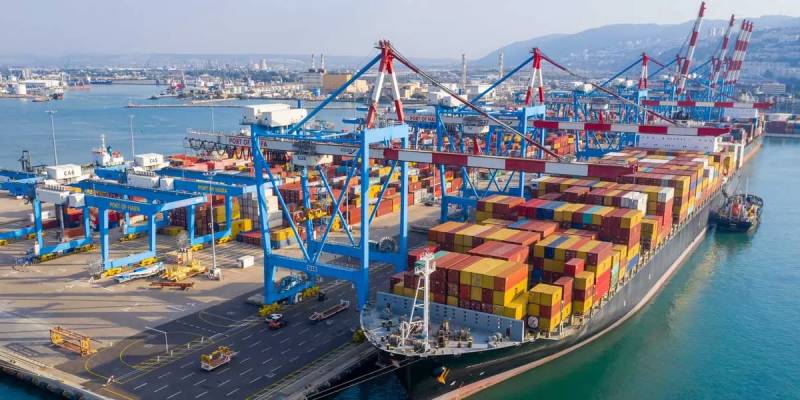
The global shipbuilding industry, which is essential to maritime trade and transport, is a fiercely competitive market where a select few players are predicted to cement their dominance and position by 2025.
This can be attributed to technological advancements, government support, evolving demand for greener and more efficient ships, excellent port infrastructure and smooth operations.
With estimates to reach USD 155.58 billion in 2025, the global shipbuilding market was valued at USD 150.42 billion in 2024.
The increase in demand for modern, environmentally conscious, and sustainable ships with effective onboard technologies and functionality is being driven by the growing volume of marine traffic.
China, South Korea, and Japan are the primary contributors to the Asia-Pacific area, which alone accounts for at least 85% of global shipbuilding activities.
2025’s Top 5 Dominating Countries
1. China
China has undoubtedly established itself as the largest shipbuilding nation globally, a status it is projected to uphold and enhance in 2025 and beyond.
The supremacy of China in this sector can be attributed to its large and skilled labor force, government backing and subsidies, strong industrial policies, significant investments in research and development, and a rapid increase in shipyard capacity.
In 2024, Chinese shipbuilders secured orders totaling 46.45 million Compensated Gross Tonnage (CGT), capturing 70% of the worldwide market share.
Chinese shipyards are fully booked for the next three to four years, with no availability until the end of 2028.
Beijing is at the forefront of new ship orders for tankers, container vessels, and bulk carriers, with a growing emphasis on high-value ships and eco-friendly orders, which represent 78.5% of alternative fuel orders in 2024.
Prominent players in the Chinese shipbuilding sector include China State Shipbuilding Corporation (CSSC), New Times Shipbuilding, and Yangzijiang Shipbuilding Group.
China is not only committed to increasing its ship production annually but also places a strong emphasis on technological innovation and sustainable development.
It is making substantial investments in new materials, digital shipyard technologies, and the creation of autonomous and environmentally friendly vessels.
While concerns regarding U.S. tariffs on Chinese-manufactured ships may have led to a minor decline in contracts during the first half of 2025, China’s extensive capacity and varied portfolio guarantee its ongoing leadership. The country’s capability to build any type of vessel provides it with a significant competitive edge.
2. South Korea
South Korea is recognized for its ability to build high-value, technologically sophisticated ships.
In 2024, South Korean shipbuilders secured orders totaling 10.98 million CGT, which represents about 17% of the global market share.
The industry’s key players include HD Korea Shipbuilding & Offshore Engineering, Hanwha Ocean, and Samsung Heavy Industries, all of which are leading names in the nation’s shipbuilding sector.
South Korea excels in constructing advanced LNG (Liquefied Natural Gas) carriers, Very Large Crude Carriers (VLCCs), and large container ships. Additionally, they are concentrating on ammonia and LPG carriers.
The country is also investing in innovative LNG ship technologies, AI-driven ship intelligence systems, and designs that are ready for carbon capture and storage (CCS).
The shipbuilding industry in South Korea is thriving due to the increasing demand for LNG and LPG carriers, alongside international environmental regulations that advocate for cleaner and greener fuels.
Although it faces competition from China, South Korea’s focus on sophisticated, high-tech vessels and its investments in research and development of green technologies help maintain its strong market position. A significant challenge is the shortage of labor, but the emphasis on high-margin projects aids in preserving its competitive advantage.
3. Japan
Japan was a leading power in shipbuilding for many years, particularly from the 1960s to the 1980s, producing nearly half of the world’s new ship tonnage.
While it remains a global contender, it has dropped to third place, following China and South Korea.
Japan is now redirecting its efforts towards high-value, specialized ships, such as eco-friendly bulk carriers and those equipped with advanced technologies, rather than merely competing on volume with China.
Japan is venturing into areas such as autonomous shipbuilding and other innovative technologies to sustain its competitive advantage.
In 2024, Japan’s order book reached 8.38 million CGT, representing 13% of the global market. The nation is renowned for its expertise in designing and building LNG and LPG vessels, reefers, and vehicle carriers. A significant part of its backlog for 2024 was made up of bulk carriers.
The government aims to double its shipbuilding capacity and raise its share of new orders in the global market to 20% by 2030.
This plan includes establishing a state-supported shipyard and merging private companies, such as a possible collaboration between Imabari Shipbuilding and Japan Marine United (JMU).
By 2025, the Japanese shipbuilding sector is concentrating on enhancing quality and investing in technological innovations for eco-friendly ships like LNG-powered car carriers while also improving productivity.
Despite ongoing challenges such as an aging workforce and labor shortages, government initiatives and private sector mergers are designed to strengthen Japan’s standing, particularly in high-value and niche markets.
4. Philippines
The geographical position of the country, along with its vast coastline, enables it to construct and repair a significant number of vessels each year. The focus is primarily on manufacturing tankers, bulk carriers, and container ships intended for export.
The maritime sector in the Philippines enjoys considerable foreign investment, with firms such as Hanjin, Tsuneishi, and Austal setting up operations within the nation.
It boasts medium to large shipyards capable of accommodating various types of vessels. While the emphasis is on exports, the strong domestic shipbuilding and repair industry also meets local demands.
In 2023, the Philippines was acknowledged as one of the top five shipbuilding countries, achieving a production output of 805,938 GT, according to the UNCTAD Review of Maritime Transport Report 2024.
In 2024, shipyards in the Philippines built 4% more vessels compared to 2023, resulting in a total of 506 ships constructed locally.
Currently, the country is also engaged in the construction of fishing vessels, bulk carriers, passenger ships, and tugs, with bulk carriers leading the way in LCVs for export in 2024.
Looking ahead to 2025, the nation anticipates growth in the production of smaller and mid-sized vessels, such as tankers and bulkers. It benefits from low labor costs and a strategic position in Asia.
The government is actively working to enhance the shipbuilding sector, encouraging foreign shipyards to establish themselves in the Philippines, which will increase capacity and production while generating more job opportunities.
5. Vietnam
Vietnam’s shipbuilding sector has experienced significant growth, focusing on both local and international markets. The government has supported this industry by providing tax incentives and subsidies.
Substantial foreign investments, particularly from Europe and South Korea, have accelerated development, while the nation has also committed resources to enhance maritime infrastructure and construct numerous shipyards.
Vietnam boasts an annual domestic shipbuilding capacity of 3.5 million tonnes dedicated to new cargo ship construction.
In 2024, the shipbuilding industry in Vietnam showcased remarkable growth, marked by the construction and delivery of various specialized vessels.
By 2030, Vietnam’s shipbuilding industry aims to secure 0.8% to 0.9% of the global output, with a focus on general cargo ships, container vessels, LPG carriers, and other service ships.
Despite challenges such as outdated infrastructure and reliance on imported materials, the advantages of competitive labor costs and government initiatives aimed at enhancing localization and technological advancements are expected to drive its growth in the upcoming years.
Conclusion
The global shipbuilding landscape in 2025 is predominantly influenced by the capabilities of China, South Korea, Japan, and emerging markets like the Philippines and Vietnam. The industry is experiencing a significant transformation, propelled by the demand for eco-friendly ships, increased automation, and advanced shipyard technologies. While traditional shipbuilding leaders continue to innovate, the emergence of new players underscores the dynamic evolution of this sector.

- NCAA Announces First Coaches’ Rankings Ahead of 2026 DI Wrestling Championships - January 30, 2026
- Hilton Grand Vacations Tournament of Champions 2026: TV Schedule, Purse, Celebrity Field & How to Watch - January 30, 2026
- NCAA Drops Official 2027 Women’s Final Four Logo for Columbus Event - January 30, 2026