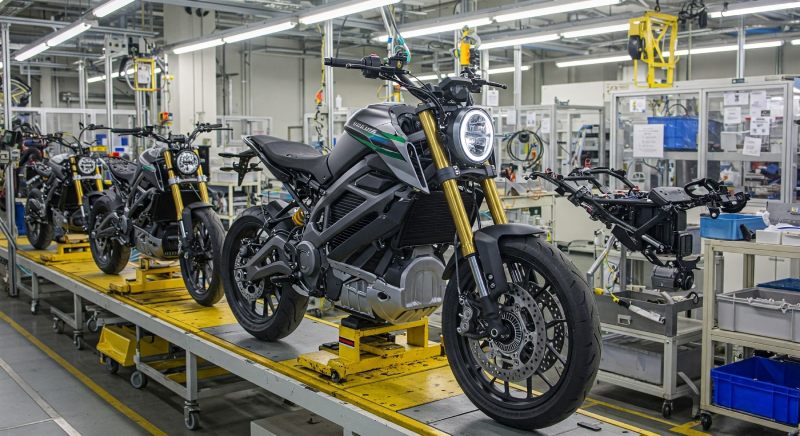
What happens when a single missing part delays the rollout of the world’s next electric motorcycle? In an industry racing toward a cleaner, more sustainable future, supply chain breakdowns are more than logistical hiccups, they are obstacles to the global clean energy transition. And behind every on-time product launch or manufacturing recovery stands someone like Ganpati Goel.
As the electric motorcycle industry surges forward, valued at $16 billion in 2023 and projected to grow at over 6% annually through 2030, the stakes are high. From the streets of Los Angeles to the crowded cities of Southeast Asia, electric bikes represent one of the most promising pathways to decarbonize transport. Yet, for manufacturers, the road to mass production is anything but smooth. Supply shortages, cost overruns, and accelerated timelines are part of daily life.
Ganpati Goel, an Advanced Purchasing Buyer at a pioneering California-based company, plays a crucial yet often overlooked role in this transformation. His job isn’t just about purchasing parts, it is about anticipating risks before they arise, streamlining complex procurement systems, and helping the company stay agile amid shifting global pressures.
“In the world of procurement, flexibility and foresight are key,” Goel says. “You can’t just react to disruptions, you have to anticipate them and build strategies that keep operations moving smoothly.”
Goel’s company is no stranger to innovation. It has supplied electric motorcycles for global summits, won the prestigious Maudes Trophy, and collaborated with industry giants like Hero MotoCorp. But even the most visionary designs are meaningless without the parts needed to bring them to life. That is where Goel’s expertise becomes indispensable.
One of the most pressing issues in electric vehicle manufacturing is the consistent availability of critical components from battery systems to wiring harnesses to control units.Goel Tackled this head-on by Proactively solved critical supply shortages for VCU, BMU, CMU, and wire harness BOM by leveraging supplier relationships to shorten lead times, identifying alternative and off-the-shelf parts, coordinating air freight, maintaining buffer stock.
To prevent slowdowns, Goel kept a buffer stock of raw material and worked with logistics partners to introduce air freight options when delays threatened to escalate. His ability to keep the flow of parts uninterrupted not only sustained production but protected his company’s market commitments.
His approach to cost optimization was equally impactful. Through a methodical Total Cost of Ownership (TCO) analysis, Goel identified hidden expenses and used that data to negotiate more favorable contracts with suppliers. Led cost transparency efforts, providing detailed component cost breakdowns to guide executive decisions, resulting in 5% under-budget program spending by using off-the-shelf parts for components with MOQs that raised liability costs.
His strategy was heavily reliant on automation, which streamlined labor-intensive workflows and reduced processing times by 25%. This digitization not only freed up resources but also improved accuracy, enabling faster decision-making and better alignment between engineering, purchasing, and production teams. As supply chain professionals we are always expected to bake a 10 min cookie in 1 min” We are always on our toes.
But Goel’s influence extended beyond operations. By engaging early with product designers and engineering leads, he ensured that supplier capabilities were considered from day one. This reduced the risk of late-stage incompatibilities and supported the company’s ability to deliver new models on time. The integration of procurement into the innovation process has been a hallmark of his approach.
His work has enabled his company to maintain its leadership position in a competitive field where traditional combustion-engine rivals are rapidly pivoting to electric. And it is not just about profits or production. Every bike that leaves the factory without delay contributes to a future with fewer emissions and quieter roads.
Goel’s contributions are a reminder that impactful innovation isn’t always flashy. Sometimes, it happens in spreadsheets and supply agreements, in early-morning calls with overseas suppliers, and in the precision of an optimized inventory system. It is the kind of behind-the-scenes work that powers entire industries.
With supply chains still recovering from the shocks of the COVID-19 pandemic and geopolitical tensions, professionals like Goel are quietly shaping the future of clean transport. By building resilient, cost-effective, and agile procurement systems, he has shown how one role can have ripple effects far beyond the warehouse floor.
As the electric motorcycle market continues to accelerate, companies will need more than cutting-edge design; they will need strategic, systems-level thinkers who can turn uncertainty into opportunity. Ganpati Goel’s story offers a blueprint for how that future can be built, one smart decision at a time.