
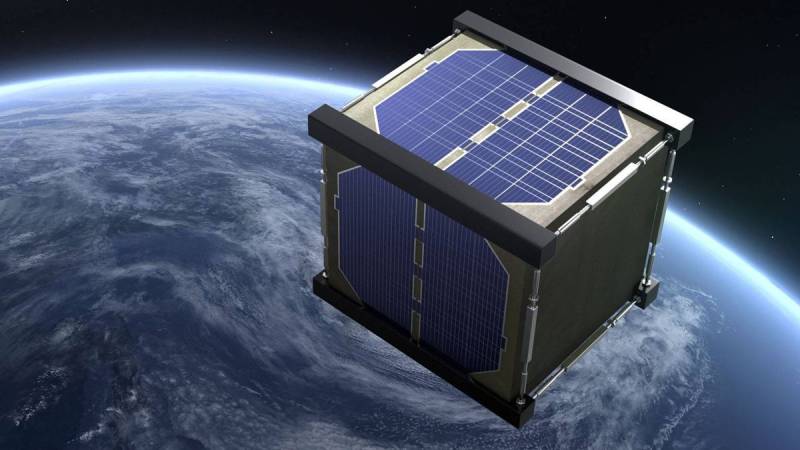
On Tuesday, the Japanese inventors of the world’s first wooden satellite announced that it had launched on a SpaceX rocket as part of a resupply mission to the International Space Station.
When a retired satellite returns to Earth, scientists at Kyoto University anticipate that the wooden substance will burn up when the gadget re-enters the atmosphere, possibly offering a technique to prevent the production of metal particles.
The developers warn that these particles could have a harmful effect on telecommunications and the environment.
LignoSat is a box-shaped experimental satellite that is only 10 centimeters (four inches) on each side.
According to Kyoto University’s Human Spaceology Center, it was launched from NASA’s Kennedy Space Center in Florida aboard an unmanned rocket.
According to a post on X, the satellite “flew into space safely” after being placed in a unique container that the Japan Aerospace Exploration Agency had constructed.
According to a spokesperson for Sumitomo Forestry, a co-developer of LignoSat, the launch was “successful” (AFP).
She stated that it “will arrive at the ISS soon, and will be released to outer space about a month later” in order to assess its robustness and longevity.
Researchers will receive data from the satellite so they may look for strain indicators and assess the satellite’s ability to tolerate drastic temperature swings.
“Satellites that are not made of metal should become mainstream,” stated astronaut and Kyoto University special professor Takao Doi during a press conference earlier this year.

- NCAA Announces First Coaches’ Rankings Ahead of 2026 DI Wrestling Championships - January 30, 2026
- Hilton Grand Vacations Tournament of Champions 2026: TV Schedule, Purse, Celebrity Field & How to Watch - January 30, 2026
- NCAA Drops Official 2027 Women’s Final Four Logo for Columbus Event - January 30, 2026


